
Intoxicating Hemp
A loophole in the congressional Farm Bill allowed for an unregulated national THC market
Introduction
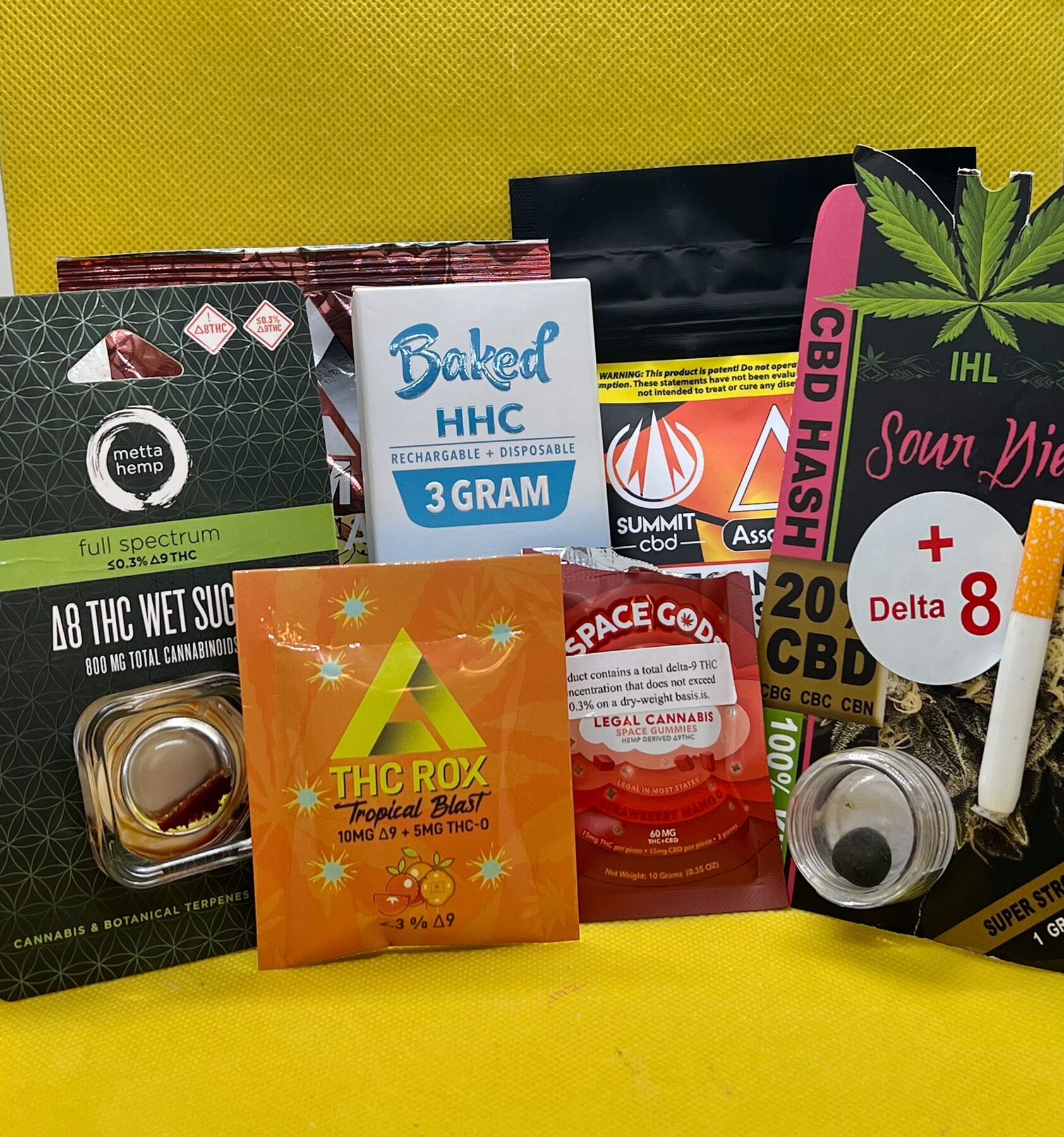
Walk into a gas station, vape shop, or corner store in almost any state (including states that have not legalized marijuana) and you can buy THC gummies, seltzers, vape cartridges, and flower that will get you high. For seven years these products were sold as “legal hemp” with little to no consistent age limits, potency testing, dosage caps, and labeling standards. Many were packaged to look like candy and snacks that appeal to kids.
That market was not something Congress voted for. It grew out of an ambiguity in a single sentence of the 2018 Farm Bill, and in November 2025 Congress closed it. One Chance to Grow Up’s questions are always the same: how does this affect kids, and what can parents and trusted adults do to protect them?
At a Glance
- Sold as
- Delta-8, delta-10, HHC, THC-O, THCP, THCA flower, “hemp-derived THC,” “legal weed,” “Farm Bill THC,” “gas station weed”
- What it does
- Effects and risks are essentially the same as marijuana-derived delta-9 THC and more unpredictable because production is unregulated
- Common forms
- Gummies, chocolates, cookies, chips, seltzers and other beverages, vapes, tinctures, pre-rolled flower
- Where it’s sold
- Gas stations, convenience stores, vape and smoke shops, grocery stores, and online often with no enforced age limit
- Legal status
- Congress redefined hemp in Public Law 119-37 (Nov. 12, 2025). The new definition takes effect December 11, 2026; until then these products remain widely available
- Youth Impact
- 11.4% of U.S. 12th graders reported past-year delta-8 use in 2023. THC harms the developing brain, which stays vulnerable to roughly age 25
What is “intoxicating hemp”?
Hemp and marijuana are not different plants. Both are Cannabis sativa L.; what separates them in federal law is THC content. THC is the intoxicating chemical in the plant that results in the “high.” Hemp is an industrial crop grown for fiber, grain, seed, and oil, and it does not contain intoxicating levels of THC.
“Intoxicating hemp” is something else entirely. Compounds such as delta-8 THC, delta-10 THC, HHC, THC-O, and THCP occur in the plant only in trace amounts, if at all. They are manufactured commercially by dissolving hemp-derived CBD in a solvent and using acids, catalysts, and heat to convert it into THC analogs. These are lab-made intoxicants.
A related product, THCA flower, is raw cannabis flower high in tetrahydrocannabinolic acid, which is the acidic precursor of delta-9 THC. It tested below the legal delta-9 threshold, so it was sold as hemp. But THCA converts to delta-9 THC the moment it is heated. That makes it functionally identical to dispensary marijuana, but it is not regulated like marijuana.
How the loophole worked
The 2018 Farm Bill removed hemp from the Controlled Substances Act to restore it as an agricultural commodity. It defined hemp as cannabis “with a delta-9 tetrahydrocannabinol concentration of not more than 0.3 percent on a dry weight basis,” assuming plants below that line could not intoxicate. The definition was written for a plant standing in a field, never as a consumer product standard for edibles, beverages, or vapes. It had three gaps:
- Only delta-9 was capped. The limit said nothing about other THC isomers and analogs, so manufacturers built products around delta-8, delta-10, HHC, and THCP.
- “Derivatives” was read expansively. Because the law de-scheduled hemp “derivatives, extracts, cannabinoids, isomers,” processors argued anything made from hemp-derived material was legal hemp — no matter how intoxicating the finished product.
- Dry weight percentage is meaningless for finished goods. A large beverage or a bag of gummies can deliver a dispensary-strength dose of THC and still sit under 0.3 percent of the product’s total weight.
These products entered the market in volume in 2020 and 2021 and grew into an industry generating tens of billions of dollars a year, sold in every state. They carried none of the safeguards regulated marijuana markets require: no consistent age gates or ID checks, no testing for potency or contaminants, no standardized labeling or warnings, no limits on serving size or package content.
Why the FDA, poison centers, and researchers are concerned
The FDA warned consumers about delta-8 THC in 2021 and 2022, cautioning that “some manufacturers may use potentially unsafe household chemicals” in the conversion process, that the finished product “may have potentially harmful by-products (contaminants)” and that manufacturing “may occur in uncontrolled or unsanitary settings.” It also flagged packaging “that may appeal to children” sold where “there may not be age limits.”
Of the 104 delta-8 adverse event reports the FDA received between December 2020 and February 2022, 55 percent required medical intervention such as emergency evaluation or hospital admission. Reported effects included hallucinations, vomiting, tremor, anxiety, dizziness, confusion, and loss of consciousness. Over roughly the same window, poison centers logged 2,362 delta-8 exposure cases, including 41 percent involving children under 18. Eighty-two percent of unintentional exposures were pediatric, and one pediatric case was coded with an outcome of death.
The trend accelerated after that. In Indiana (a state that has not legalized marijuana) cannabinoid exposures reported to poison centers rose 41 percent between 2022 and 2024, with exposures among children ages 6-12 up 62%. The underlying risks are the familiar risks of THC-- dependence, depression and anxiety, uncontrollable vomiting, and psychosis – all more dangerous for adolescents, because THC acts on a brain in active development through the mid-twenties.
Why this is a youth issue
In a nationally representative 2023 survey published in the Journal of the American Medical Association (JAMA), 11.4 percent of U.S. 12th-grade students reported past-year delta-8 THC use, compared to 30.4 percent for marijuana. Use was highest in the South and Midwest and in states without legal adult marijuana markets.
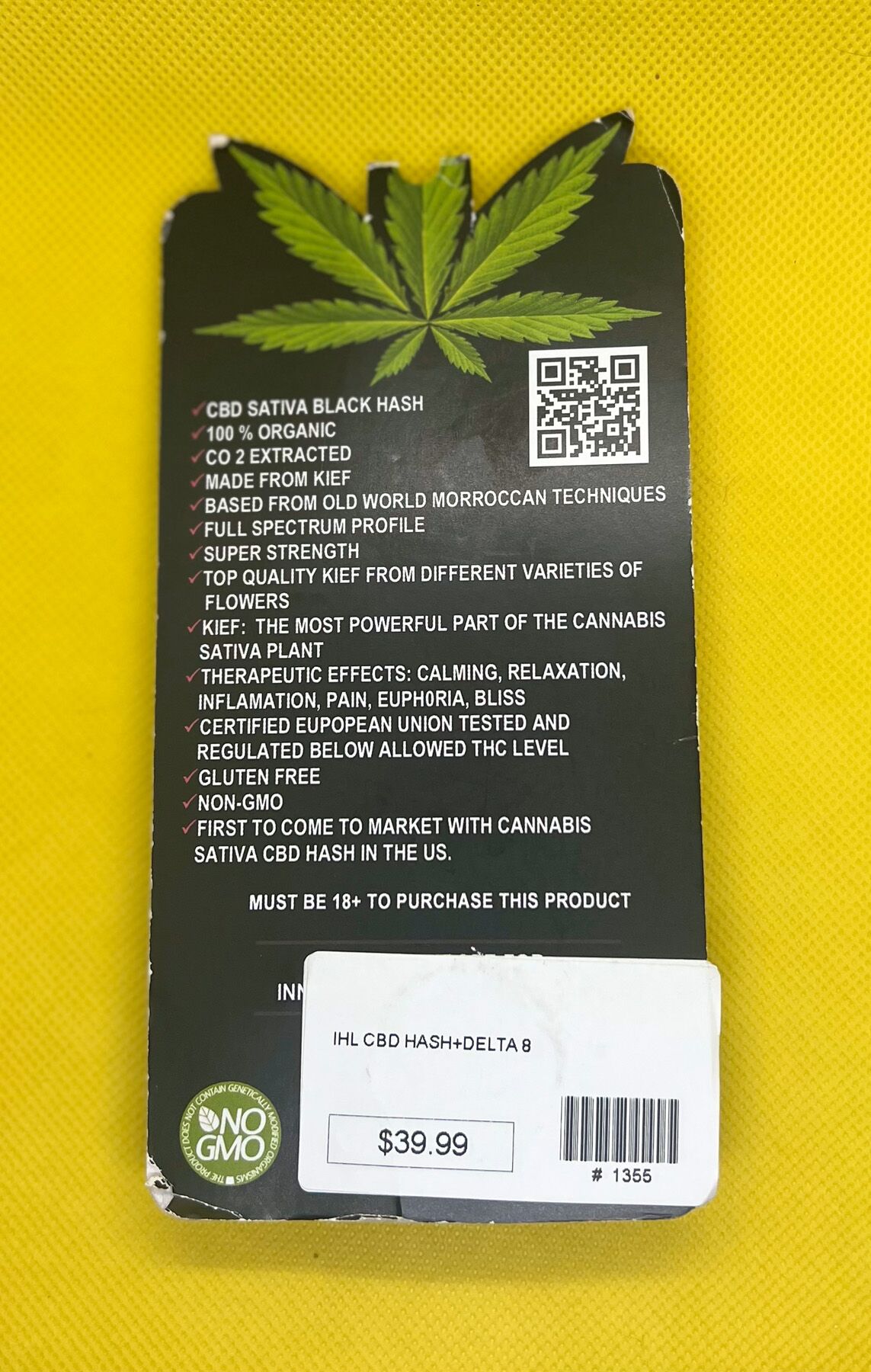
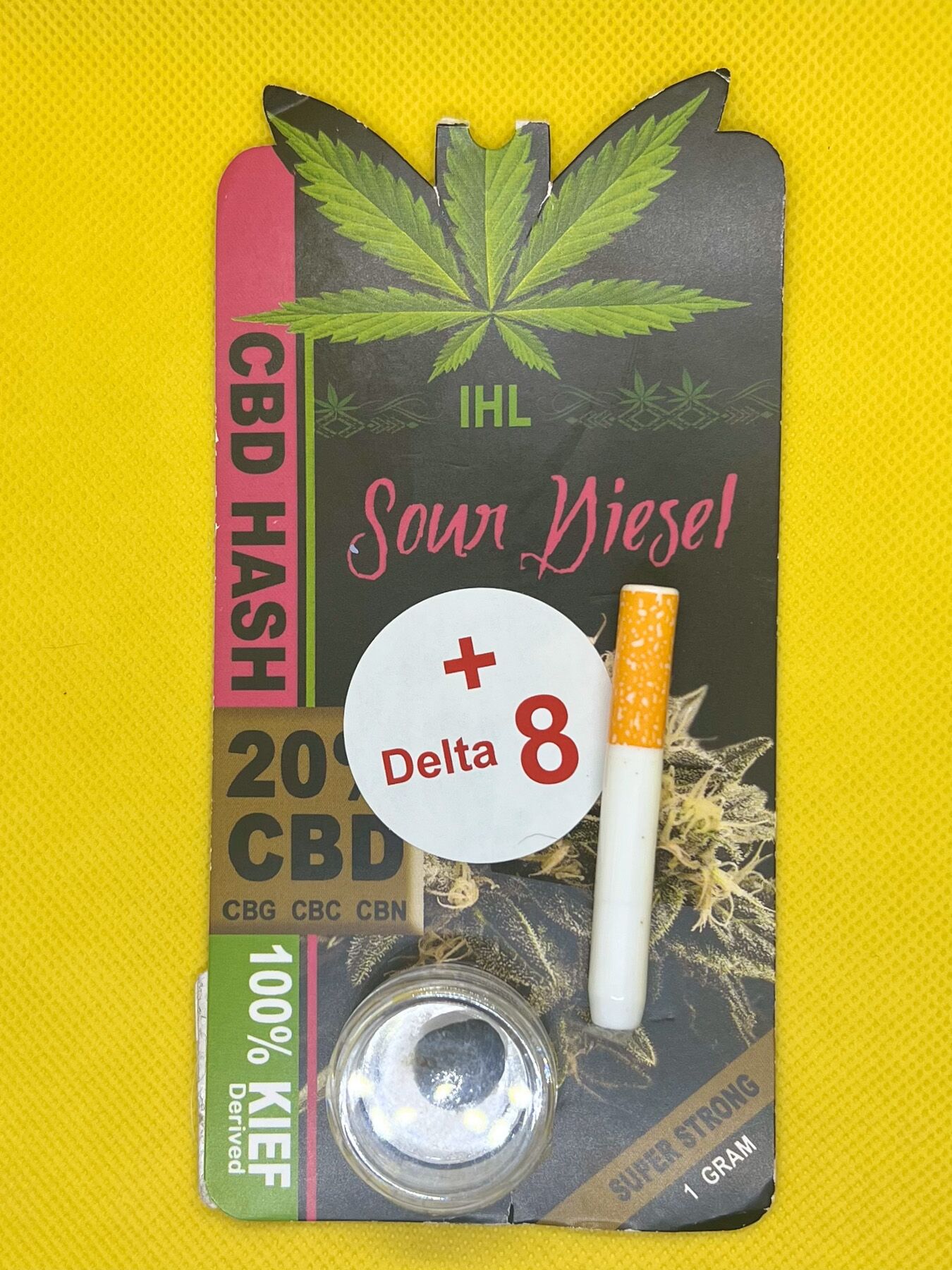
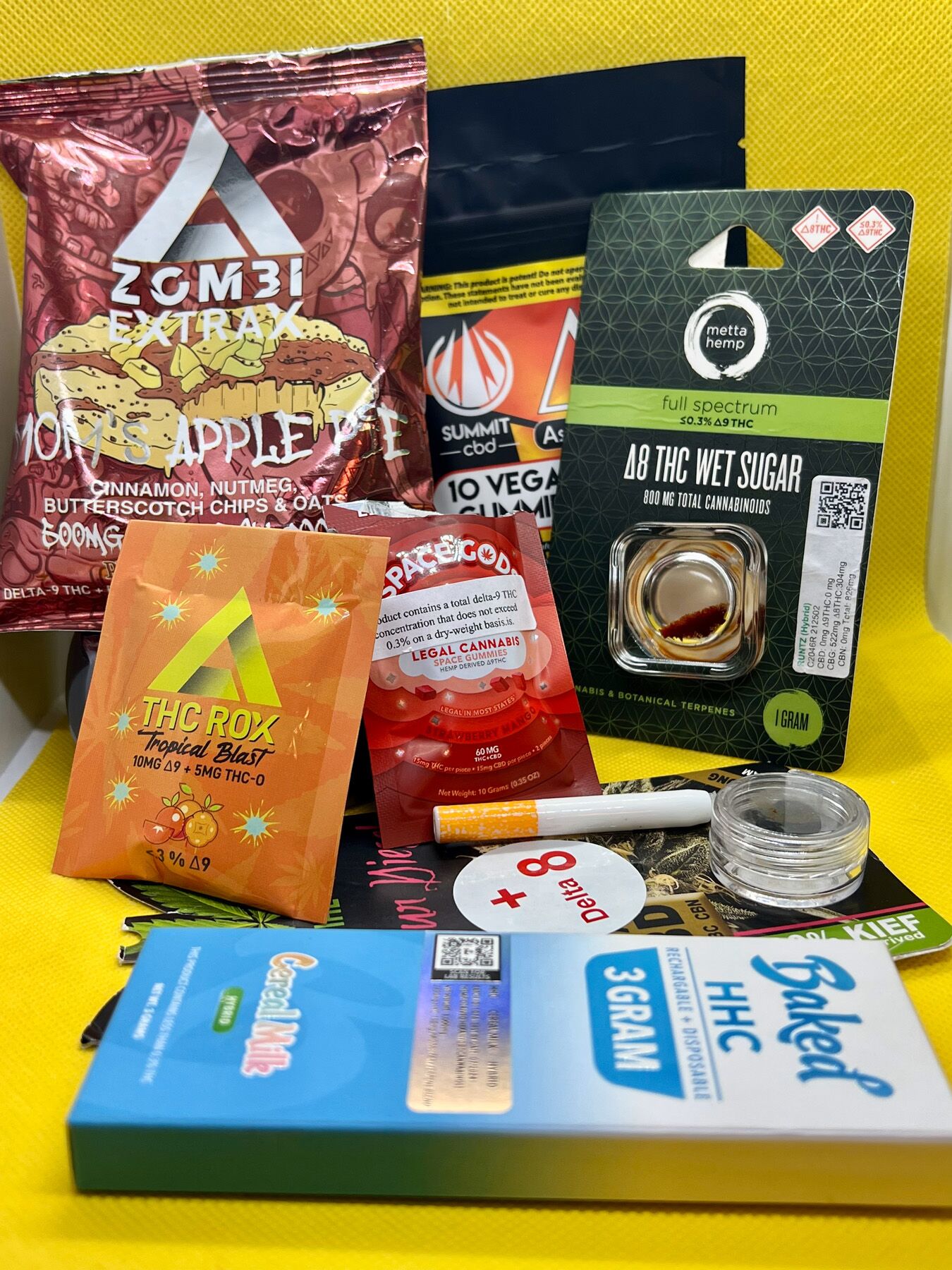
Product design is a major factor in causing harm. Intoxicating hemp edibles routinely imitate the trade dress of familiar snack brands-- such as the “dupe” products that turn up again and again in accidental ingestion cases involving young children. Others used bright colors, dessert and candy flavors, and whimsical packaging, or advertised unverified benefits for mood, anxiety, and focus. This is the pattern One Chance to Grow Up warns about across the whole Gas Station Drugs category: a real drug, disguised as a treat, sold beside the snacks, with no one checking ID.
What this looks like on the shelf
How the loophole was closed
What closed the loophole was the breadth of agreement on a simple proposition: whatever your view of regulated marijuana markets, intoxicating drugs should not be sold as unregulated “hemp” in gas stations, in packaging designed to look like children’s snacks. This drew support from broad constituencies: 39 state and territory attorneys general, the Consumer Brands Association, state cannabis regulators, the regulated cannabis industry, and hundreds of parent, youth, medical, and public health organizations.
One Chance to Grow Up worked the problem using the model it had used for more than a decade in Colorado: buy the products and photograph them (building a public archive at THCphotos.org), follow the data, and engage decision makers-- including more than 93 presentations and meetings on Capitol Hill, often bringing harmed parents and clinicians into the room. Firsthand evidence matters as much as any medical dataset, including photographs of dispensary-strength products in candy packaging that make an abstract problem more concrete.
When Congress assembled the package to reopen the government after the longest shutdown in U.S. history, the hemp fix (championed by Senator Mitch McConnell, the original architect of the 2018 hemp provision) was included. Senator McConnell told the Senate the provision “will keep these dangerous products out of the hands of children” while preserving industrial hemp for farmers. The Senate agreed, 76 to 24. President Trump signed it into law on November 12, 2025.
What the new law does — and does not do
Section 781 amends the federal definition of hemp to the following:
- Total THC standard: Hemp is redefined by total tetrahydrocannabinols, including THCA, at not more than 0.3 percent dry weight. This closes the THCA flower loophole by measuring what a final product actually contains.
- Synthetic and converted cannabinoids excluded: Cannabinoids the plant does not naturally produce, or that were synthesized outside the plant, are no longer hemp. Delta-8, delta-10, HHC, THC-O, and THCP fall under the Controlled Substances Act.
- A container cap for finished products: No more than 0.4 milligrams of total THC per container for a dose-based standard replacing the problematic dry weight percentage.
- A federal science process: Federal regulators must identify which cannabinoids occur naturally and which have THC-like effects. This is the first federal, science-based foundation for cannabinoid policy.
- Protection for real hemp: Industrial hemp is defined and expressly protected: fiber, grain, seed, oil, microgreens, and research. Nonintoxicating CBD products under the cap remain legal, and FDA-approved drugs are carved out.
This is not a ban on hemp. As the attorneys general put it, prohibiting intoxicating THC products does not inhibit hemp cultivation, because hemp does not contain intoxicating levels of THC, and reporting indicates lab-produced intoxicants use very little hemp acreage. Nor is it a ban on THC products. Manufacturers can reformulate to meet the federal standard, or sell THC through state-regulated marijuana markets under the same rules they follow.
What still has to happen
In August 2026, Congress voted to delay the full loophole closure implementation date by one month after intense lobbying by the intoxicating hemp industry. This means the full protections do not arrive until December 11, 2026. Until then, intoxicating hemp products remain widely available with no age restrictions, safety regulation, or dosing requirements.
The industry is spending heavily to blunt the law. The case against more delays is very simple: the industry has had seven years to adopt safeguards and chose not to and every month of delay is another month in which dispensary-strength intoxicants sit beside the candy with no age gate. There is no reason for a separate intoxicating hemp industry when the regulated marijuana markets already exist in many states.
What parents and trusted adults can do
- Look at what is actually on the shelf: Visit local smoke shops and gas stations, see what intoxicating hemp products are for sale, and photograph them. Submit photos to our gas station drugs photo gallery at stopgasstationdrugs.org.
- Know the terminology: Delta-8, delta-10, HHC, THC-O, THCP, and THCA are intoxicating. “Hemp-derived” and “Farm Bill compliant” do not mean safe.
- Talk with kids about the disguise, not just the drug: The way these products are packaged is the point. A product that looks like a snack brand and invokes wellness is designed to appear harmless or even healthy, concealing potential risks.
- Support state policy alignment: Ensure states match the federal standard, and watch for carve-out bills that allow these risky products to stay on shelves.
Getting intoxicating hemp off shelves also builds momentum on the rest of this category of “gas station drugs,” including kratom and its concentrated derivative 7-OH, nitrous oxide, and more. They are sold in the same stores, often produced by the same commercial actors. It is also crucial that there be no further delay to the full implementation of the intoxicating hemp loophole.
Reach out to your elected representatives and tell them you believe the federal hemp loophole must be closed without further delay. Regulated markets with safeguards for youth already exist in states where voters have chosen to legalize cannabis, and the loophole closure already provides pathways for intoxicating hemp producers to transition to those markets. The biggest risk to kids is letting these products continue to be sold in everyday locations where youth can access them with little impediment.
The Bottom Line
- Intoxicating hemp products are lab-made THC with the same high, and the same risks, as dispensary marijuana, often sold without age limits, testing, labeling, or dose caps.
- The market existed because of a loophole in the 2018 Farm Bill’s definition of hemp, not because it was officially legalized.
- The public health record is clear about youth exposure: ER medical incidents, thousands of poison center calls with kids, and 11.4% past-year use among 12th graders.
- Congress closed the loophole in November 2025 with a 76–24 Senate vote and one of the broadest bipartisan coalitions in recent memory.
- The hemp loophole protections are won but not yet realized due to industry lobbying.
- Real hemp is safe in the loophole closure: fiber, grain, seed, oil, and nonintoxicating CBD are all protected.
Sources
- Public Law 119-37, Continuing Appropriations and Extensions Act, 2026, § 781 (Nov. 12, 2025), amending 7 U.S.C. § 1639o
- Agriculture Improvement Act of 2018 (2018 Farm Bill), Pub. L. 115-334
- FDA, “5 Things to Know about Delta-8 Tetrahydrocannabinol,” consumer update, 2021–2022 (adverse event and poison center data, Dec. 1, 2020 – Feb. 28, 2022)
- Harlow A.F. et al., “Self-Reported Use of Delta-8 THC Among US 12th-Grade Students,” JAMA, 2024
- National Association of Attorneys General, letter of 39 state and territory attorneys general to congressional leadership, Oct. 24, 2025
- Consumer Brands Association, letter to congressional leadership, Sept. 24, 2025; American Distilled Spirits Alliance, Beer Institute, DISCUS, Wine America & Wine Institute, joint letter, Nov. 4, 2025
- Cannabis Regulators Association (CANNRA), letters to House and Senate Agriculture Committees, 2022–2025; ATACH, 2026 Hemp Intoxicants Report
- Indiana Poison Center cannabinoid exposure data, 2022–2024; Congressional Record, Senate vote to table S.Amdt. (Paul), 76–24, Nov. 2025; House Agriculture Committee markup, Mar. 5, 2026
- One Chance to Grow Up, “Closing the Intoxicating Hemp Loophole” white paper, 2026; THCphotos.org product documentation archive
Stay in the loop
Stay ahead of new products reaching the shelves.
Get plain-language updates from One Chance to Grow Up on Gas Station Drugs including what's being sold, what to watch for, and what you can do about it.
Sign Up for Updates