
Amanita Muscaria
The candy-colored “mushroom” gummies and chocolates on smoke-shop shelves, why the FDA says they do not belong in food, and why what is inside the package is often not what the label claims.
Introduction
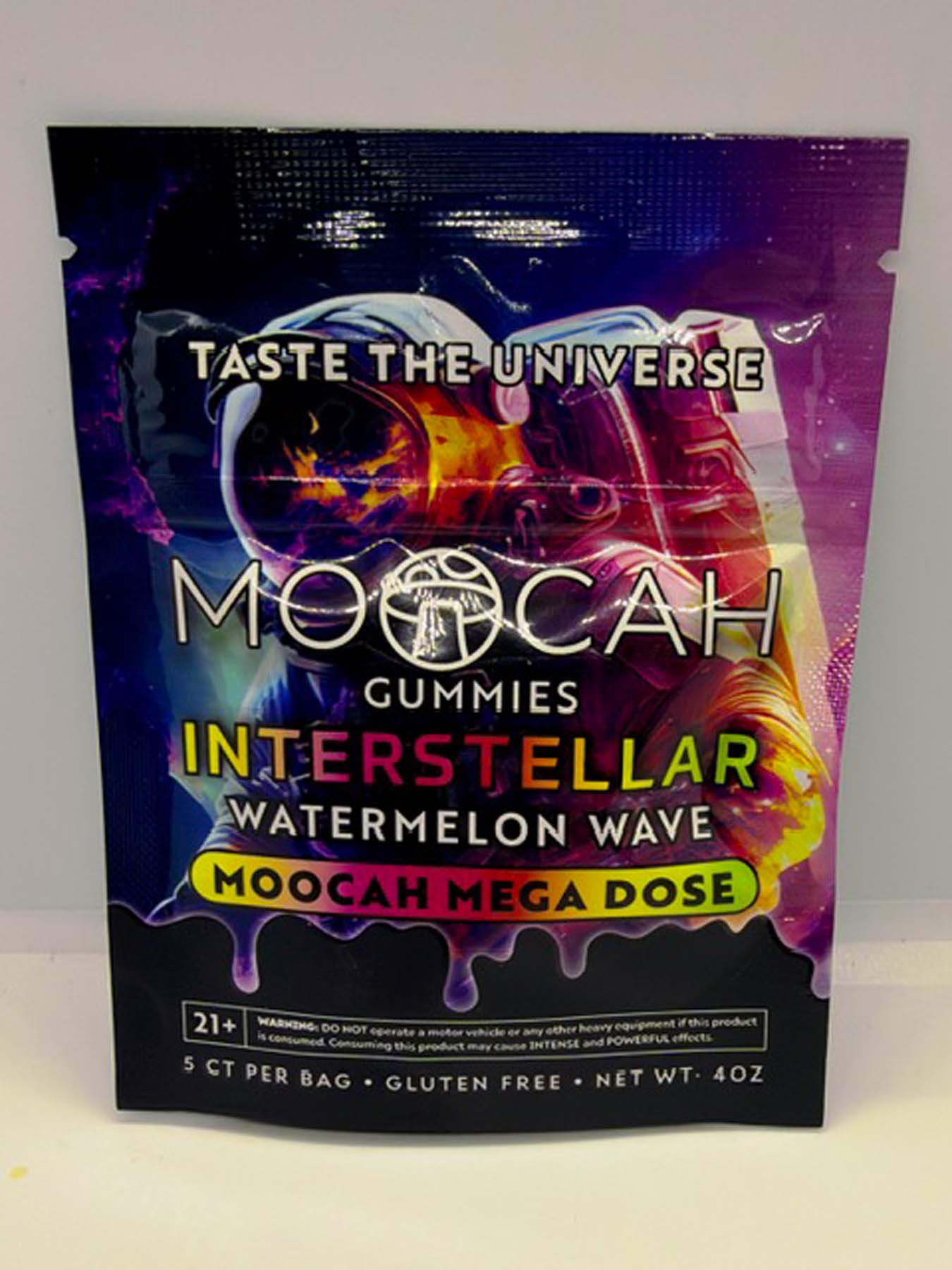
Walk into a smoke shop, vape store, or gas station and you will increasingly find “mushroom” products next to the candy and the energy drinks: fruit-flavored gummies, chocolate bars, and vape cartridges promising a legal trip. Many are built on Amanita muscaria, which is the red-and-white toadstool mushroom depicted in many storybooks, and marketed with words like “magic,” “psychedelic,” and “microdose.” The branding is designed to evoke illegal psilocybin “magic mushrooms,” but Amanita muscaria is a different mushroom with a different and in some ways more unpredictable chemistry. Because it contains no psilocybin, it currently sits outside federal drug law and is sold openly.
This brief covers what Amanita muscaria is, what its active compounds do, why the FDA has moved against its use in food, and why independent testing keeps finding that these products do not contain what the label says. One Chance to Grow Up’s questions are always the same: how does this affect kids, and what can parents and trusted adults do about it?
At a Glance
- Sold as
- Amanita, fly agaric, Amanita muscaria, muscimol, “legal magic mushrooms,” “psychedelic edibles,” “mushroom nootropics,” “microdose” gummies
- What it does
- The active compounds muscimol (a GABA-A sedative/deliriant) and ibotenic acid (a glutamate neurotoxin) can cause sedation, altered perception, confusion, nausea and vomiting, and in larger doses can cause delirium and seizures
- Common forms
- Gummies, chocolate bars, candies, capsules, powders, and vape cartridges often in bright, cartoon packaging
- Where it’s sold
- Smoke and vape shops, gas stations, convenience stores, and online – typically with no enforced age limit
- Legal status
- Not a federally scheduled controlled substance. In 2024 the FDA declared Amanita muscaria and its constituents unapproved food additives, not legal for use in food. Banned outright only in Louisiana
- Youth Impact
- Candy-like forms with no age verification; a 3-year-old was hospitalized after eating two gummies. Products labeled as amanita have tested positive for undisclosed, illegal, and prescription drugs
What is Amanita muscaria?
Amanita muscaria, commonly called fly agaric, is the iconic red-capped, white-spotted mushroom commonly depicted in classic fairy tales and video games like the Mario series. It grows wild across the Northern Hemisphere and has a long history of ritual and folk use in parts of Europe and Asia. The problem is not the mushroom’s existence but what is now being manufactured from it and sold as candy and other child-friendly products (just as in the case of other “gas station drugs”).
Amanita muscaria is not a psilocybin mushroom. Psilocybin “magic mushrooms” are federally illegal Schedule I drugs and Amanita muscaria works through entirely different chemistry. Its two main psychoactive compounds are muscimol and ibotenic acid (with trace amounts of muscarine). Muscimol is a potent agonist at the brain’s GABA-A receptors, which are the same braking system targeted by sedatives, producing depressant, dream-like, and deliriant effects. Ibotenic acid acts on glutamate (NMDA) receptors and is regarded as a neurotoxin. The FDA has listed Amanita muscaria and these constituents as toxic agents that cause poisoning since 2012.
What makes the marketed products different?
Mushrooms in the woods are one thing, but synthesized products on the shelf without regulations or safeguards are another. Retail amanita products come as concentrated extracts pressed into gummies, chocolate bars, and vapes, with labels listing muscimol and ibotenic acid amounts that are neither standardized nor independently verified. The ratio of dosage-to-effect is unpredictable to begin with. The same person can react very differently to the same amount, and concentrated extracts remove whatever natural ceiling a raw mushroom might impose. Effects can also be delayed, which invites dangerous redosing before the first dose has taken hold.
The marketing leans hard on the psilocybin association, despite true psilocybin mushrooms being a federally illegal substance and these items coming from an entirely different fungi. Products carry names like “Magic Mushroom Gummies,” art of glowing toadstools, and flavor names such as “Juicy Mango” and “Watermelon.” Dosing charts run from “day at the office” to a skull-faced “day on the moon.” The effect is to sell an intoxicant using the visual language of both candy and illegal psychedelics at once.
“Amanita muscaria, its extracts, and certain of its constituents (muscimol, ibotenic acid, and muscarine) are not authorized for use as ingredients in conventional food … their use as food ingredients may be harmful.” — U.S. Food & Drug Administration, industry alert, December 18, 2024
A deeper problem is that the label often cannot be trusted at all. When the University of Virginia’s health toxicology lab tested six packages of mushroom gummies marketed as amanita or “nootropics,” four contained undisclosed psilocybin or psilocin (the very Schedule I drugs the products are not supposed to contain) along with unlabeled caffeine, the kratom compound mitragynine, and DMT. A shopper reaching for a “legal” amanita gummy may be buying an illegal drug, a prescription drug, or a mix of several, with none of them on the label. When considering potential accidental ingestions by youth, there is even greater reason for concern.
Why the FDA, CDC, and others are concerned
On December 18, 2024, the FDA formally alerted industry and consumers that Amanita muscaria, its extracts, and its constituents do not meet the “Generally Recognized as Safe” (GRAS) standard and are unapproved food additives. It is not legal to put them in food, and the agency “recommends that people avoid eating foods with these ingredients.”
The FDA specifically noted that these products “look like their conventional counterparts, like candy bars.” In September 2025 the agency followed up with a warning letter to a manufacturer, Blue Forest Farms, over adulterated amanita products, signaling that enforcement, including possible seizure or injunction, is possible.
Concerns are due to evidence of real harms from these products. In a Centers for Disease Control (CDC) Morbidity and Mortality Weekly Report published July 18, 2024, doctors in Charlottesville, Virginia documented five people, including a 3-year-old child, who required hospital care after eating gummies labeled to contain amanita; symptoms included tachycardia (abnormal heart rate), confusion, agitation, somnolence (intense sleepiness), and vomiting.
Separately, a larger 2024 incident tied to Diamond Shruumz-brand “microdosing” chocolate bars and gummies grew to 180 illnesses across 34 states, with 73 hospitalizations and 2 potentially associated deaths. Investigators found muscimol in some Diamond Shruumz products but also several other compounds, and the FDA stressed muscimol alone could not explain all the symptoms. When the contents of these products are unregulated, undisclosed, and inconsistent, no one-- including the buyer or an ER doctor-- can be sure what they are dealing with, which dramatically increases the potential for harm.
Why this is a youth issue
There is no reliable data on how many teenagers use amanita products specifically as it is a novel product category. But the youth risk does not depend on prevalence numbers and is instead built into how these products look and where they are sold. Gas Station Drugs, regardless of what they are, follow the same predictable pattern, which is why they proliferate and continue to cause risks. Gummies and chocolate bars in fruit flavors and cartoon packaging are, by design, indistinguishable from candy. In the CDC report of a hospitalized 3-year-old, for example, the child found what looked like a treat that was instead a psychedelic.
The story across every Gas Station Drug is the same: an intoxicating drug dressed up as a snack that is sold on a local corner store shelf with no one checking ID, no labeling requirements, and no authority testing products. Because amanita intoxication can look like cannabis intoxication, it can also be missed in a pediatric emergency room, and standard urine drug screens do not detect these compounds. If an adult cannot tell the difference at a glance and cannot even trust the label, a child certainly can’t.
What this looks like on the shelf
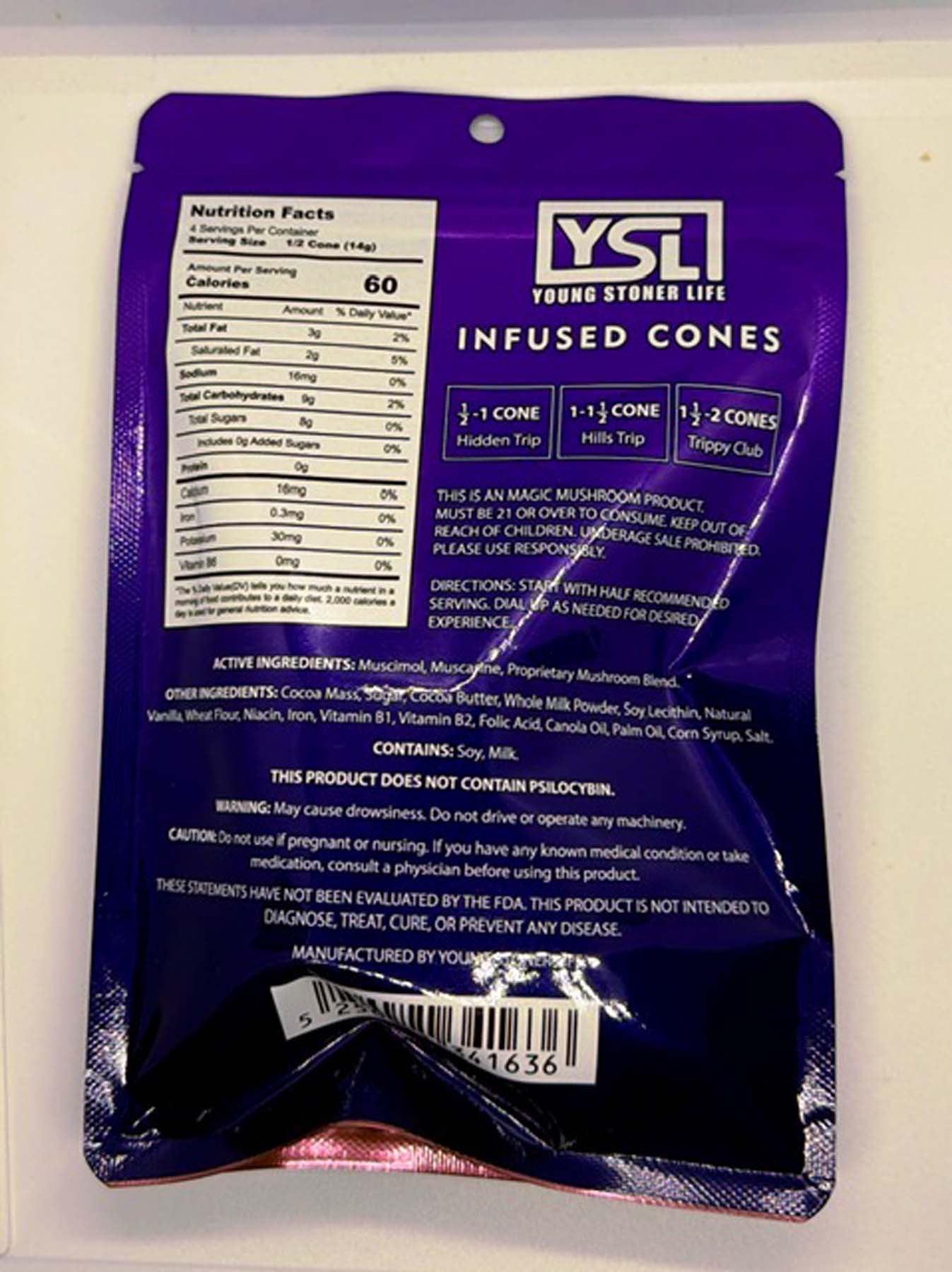
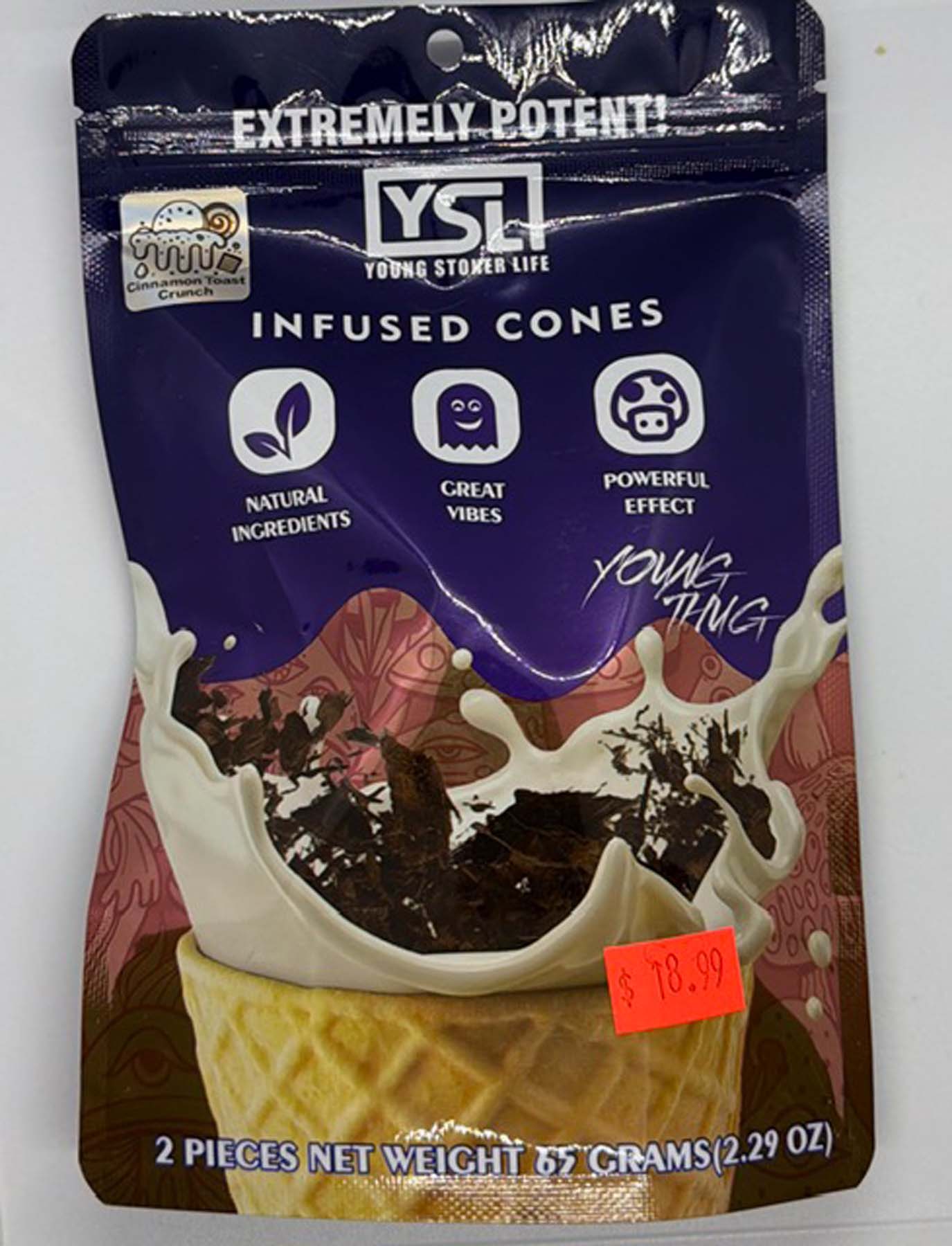
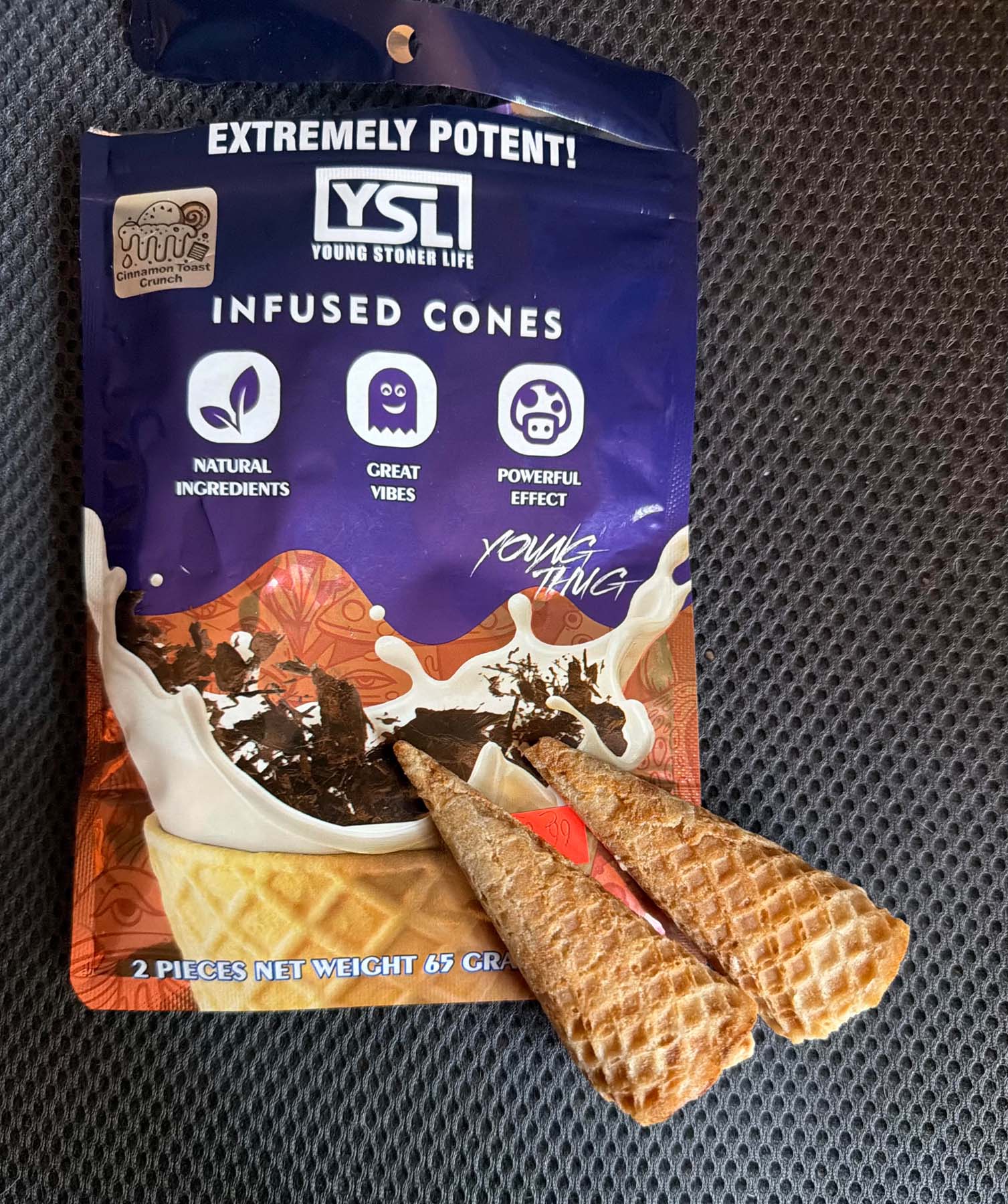
Where policy stands
At the federal level, Amanita muscaria and muscimol are not scheduled controlled substances (unlike psilocybin) which is the loophole that lets them be sold openly. What the FDA has done is narrower but significant. In its December 2024 determination, it makes them illegal to use as food or beverage ingredients, and the agency is now assessing their use in dietary supplements as well.
The FDA regulates dietary supplements primarily through post-market surveillance rather than pre-market approval. Unlike conventional foods and beverages where food additives must be pre-approved by the FDA or designated as Generally Recognized as Safe (GRAS) before hitting the market, supplement manufacturers are responsible for evaluating their own product safety and labeling prior to distribution. This is what enables manufacturers of these mushroom products to to make health claims without prior FDA evaluation, provided the label includes a disclaimer.
Enforcement is still ramping up, which is why the products remain widely available while the legal status catches up.
A number of other states have begun examining the category as part of broader action on intoxicating hemp, kratom, and other “gas station” products, but as of mid-2026 no comprehensive state framework has emerged for targeting the recurring pattern of products targeting youth.
What parents and trusted adults can do
- Look at what is actually on the shelf: Visit local smoke shops and gas stations, see what “mushroom” products are for sale, and photograph them. Submit photos to our gas station drugs photo gallery at stopgasstationdrugs.org.
- Know the terminology: “Amanita,” “muscimol,” “fly agaric,” “magic,” “psychedelic,” “microdose,” and “nootropic” on a candy or gummy signal an intoxicant — not a snack and not a supplement.
- Talk with kids about the disguise, not just the drug: The danger is that a chocolate bar or fruit gummy is designed to look harmless and familiar.
- Know that the label may be wrong: Independent testing has found these products carrying undisclosed illegal, prescription, and other drugs. “Legal” or “natural” on the package are not to be trusted as fact.
- Reach out to law enforcement and elected officials: Ask about the FDA’s December 2024 food determination and your state’s status, as well as if your community already has an effort underway to address gas station intoxicants.
Amanita products sit in the same retail channel as intoxicating hemp, kratom and 7-OH, and nitrous oxide, frequently sold by the same companies. The advocacy model that closed the intoxicating hemp loophole can help us address the repeating pattern of new intoxicants targeting youth.
One Chance to Grow Up’s concern is the intoxicating, inconsistently labeled products, built to look like candy and illegal psychedelics, sold to anyone with no age check. Like with marijuana, there should be a distinction between the politics of adult use and regulation for youth safety.
The Bottom Line
- Amanita muscaria is a psychoactive mushroom whose active compounds cause sedation, confusion, delirium and seizures — it is not psilocybin, which is why it is sold legally.
- It is sold as candy-like gummies, chocolate bars, and vapes, marketed as “legal magic mushrooms,” typically with no enforced age limit.
- The FDA declared it and its constituents unapproved food additives — not legal to use in food — and began warning manufacturers.
- Products labeled as amanita have repeatedly tested positive for undisclosed drugs, including Schedule I psilocybin; the label cannot be trusted.
- Documented harms include a hospitalized 3-year-old and an incident tied to look-alike “microdosing” edibles.
- The goal is to get intoxicating, mislabeled, candy-styled products off open shelves and away from kids.
Sources
- FDA, “FDA Alerts Industry and Consumers about the Use of Amanita Muscaria or its Constituents in Food,” HFP Constituent Update, Dec. 18, 2024
- FDA, “Letter to Industry on the Use of Amanita Muscaria or its Constituents in Food,” and Scientific Memorandum: Amanita Muscaria, Sept. 9, 2024
- FDA, Bad Bug Book (2nd ed., 2012) — Amanita muscaria and constituents listed as toxic agents
- FDA, Warning Letter to Blue Forest Farms LLC, Sept. 11, 2025
- Michienzi A, Hamlin J, Farah R, Bazydlo L. “Schedule I Substances Identified in Nootropic Gummies Containing Amanita muscaria or Other Mushrooms — Charlottesville, Virginia, 2023–2024.” CDC MMWR 2024;73(28):628–630
- FDA/CDC, “Investigation of Illnesses: Diamond Shruumz-Brand Chocolate Bars, Cones & Gummies (June 2024),” final update Oct. 2024 (180 illnesses, 34 states, 73 hospitalizations, 2 potentially associated deaths)
- Moss MJ, Hendrickson RG. “Toxicity of muscimol and ibotenic acid containing mushrooms reported to a regional poison control center, 2002–2016.” Clin Toxicol 2019;57:99–103
- Louisiana Revised Statutes § 40:989.1 (prohibited hallucinogenic plants; ornamental exception)
- PubChem compound records: Muscimol (GABA-A agonist); Ibotenic acid (glutamate agonist)
Stay in the loop
Stay ahead of new products reaching the shelves.
Get plain-language updates from One Chance to Grow Up on Gas Station Drugs including what's being sold, what to watch for, and what you can do about it.
Sign Up for Updates